

Choosing the right door style for your home exterior affects security, energy efficiency, and curb appeal. With so many options in materials, styles, and configurations, it can feel overwhelming. This guide will help you understand your choices and make informed decisions for your new home.
1. Why the Right Door Style Matters
An exterior door is often the first thing visitors notice about your home. Beyond aesthetics, it plays a key role in insulation, protection from weather, and security. Choosing the wrong door can lead to drafts, higher energy bills, poor temperature control, and even increased risk of break-ins. It may also affect your home’s curb appeal, making a strong first impression harder to achieve. Selecting the right door ensures your home is functional, secure, energy-efficient, and visually appealing.
Using the wrong door can compromise your home’s security. Doors that are poorly constructed, improperly installed, or made of weak materials can be easier targets for burglars. Even a stylish door may not provide adequate protection if it lacks reinforced cores, strong locks, or proper alignment. A secure, well-chosen door not only deters intruders but also gives you peace of mind knowing your home and family are protected.
Explore a wide variety of exterior doors to see different styles, materials, and finishes. This article by US government explain how doors can conserve energy also explains how different door materials affect insulation and energy costs.”
2. Single vs. Double Entry Doors Style
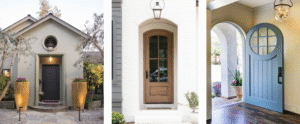
Single Entry Doors
Single entry doors are ideal for smaller entryways or minimalist homes. They offer elegance, efficiency, and security without taking up too much space.
Standard single doors typically measure around 30–36 inches wide and 80 inches tall, making them a practical choice for most residential openings.
When to use Single Entry Doors
Single entry doors complement narrow entryways and cozy porches, creating a clean, streamlined look. Light or neutral-colored doors work well with soft-toned exteriors, while natural wood or bold colors can add a pop of personality to white, gray, or pastel homes. Single doors also suit homes with simpler architectural lines, allowing the door to enhance the overall style
Security Tips for Single Doors:
-
Install a solid core door for better resistance to forced entry.
-
Use high-quality deadbolt locks and reinforced strike plates.
-
Add a peephole or smart doorbell camera to monitor visitors.
-
Consider a security bar or door brace for extra protection in high-traffic or vulnerable areas.
-
Maintain proper door frame alignment to prevent easy prying or warping.
Double Entry Doors
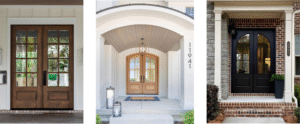
Double entry doors are suitable for larger homes or grand entrances. They allow more light, wider access, and a spacious feel for high-traffic areas.
Standard double doors are usually about 60–72 inches wide, providing a more expansive entryway while maintaining functionality and style.
When to use Double Entry Doors
Double entry doors are perfect for homes with a spacious foyer or a wide front porch, such as larger suburban or colonial-style houses. If your home features high ceilings and a symmetrical façade, these doors can enhance the sense of grandeur. Light-colored double doors complement traditional brick or beige-toned exteriors, while darker wood or painted doors work well with modern or craftsman-style homes. Choose this style if you often host gatherings, need to move furniture or large items easily, or want to let in more natural light for an open, inviting entrance.
Screen Doors
Screen doors allow ventilation while keeping pests out and can be paired with single or double doors. They come in matching standard sizes or custom-fit options to complement your main door, with various configurations and finishes available.
Screen doors are ideal for homes in warmer climates or for those who enjoy fresh air and natural ventilation. They work well on homes with porches, patios, or garden-facing entryways, allowing airflow without letting insects inside. Light-colored or neutral screens complement most exterior paint tones, while darker frames can add contrast and visual interest. Screen doors pair best with simpler door designs, enhancing functionality without overpowering the home’s overall aesthetic.
3. Choosing the Right Door Material
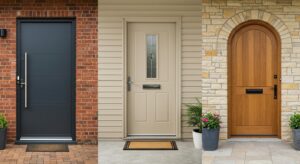
Door material affects durability, maintenance, and energy efficiency. Common materials include:
-
Wood: Wood doors are perfect for traditional, craftsman, or rustic-style homes, adding warmth and timeless charm. Natural wood tones pair well with earthy or neutral exterior colors, while painted finishes can complement more vibrant home palettes. Ideal for homeowners who appreciate a classic look and don’t mind regular maintenance.
-
Steel: Steel doors suit modern or minimalist homes, providing sleek, clean lines and high security. They work well with neutral or bold exterior colors, and are ideal for homeowners looking for low-maintenance durability without sacrificing style.
-
Fiberglass: Fiberglass doors are versatile, matching both traditional and contemporary designs. They mimic wood grain while offering energy efficiency and low maintenance, making them suitable for homes in varying climates. Neutral, earthy, or pastel exterior colors pair well.
-
Aluminum: Aluminum doors fit contemporary, industrial, or urban-style homes. Their lightweight, corrosion-resistant nature complements bold or modern color schemes and large glass inserts, creating a streamlined, modern look.
-
Glass Panels: Glass panel doors are ideal for patios, sunrooms, or modern front entrances where natural light is desired. Frosted, textured, or clear glass can enhance privacy while brightening interiors, pairing best with minimalist or modern exterior styles.
Browse our exterior doors to see options by material and style. For more ideas on pairing doors with architectural styles, check out front door design guide.
4. Popular Themes matched with door materials
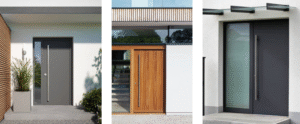
- Modern: Houses with clean, straight lines, flat or low-pitched roofs, and minimal ornamentation. Often large windows, open layouts, and neutral or bold colors define the look. Steel, aluminum, or glass-panel doors pair well.
-
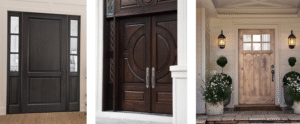
Classic/Traditional: Houses with symmetrical shapes, gabled roofs, and decorative trim. Often brick or wood siding with paneled doors and soft, neutral tones. Wood or fiberglass doors enhance their timeless elegance.
-
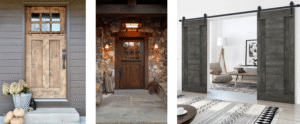
Craftsman: Characterized by wide front porches, tapered columns, and exposed wooden beams. Natural materials like stone or wood dominate. Wood or wood-look fiberglass doors highlight the handcrafted feel.
-
Contemporary: Features bold shapes, large windows, and asymmetrical designs. Often a mix of materials like metal, glass, and concrete. Aluminum, steel, or fiberglass doors with glass inserts work best. Similarly to Modern Style
-
Rustic/Distressed: Typically farmhouse, cabin, or country homes. Textured or reclaimed wood, stone accents, and earthy colors are common. Wood doors with natural grains or weathered finishes match the warm, inviting style.
-
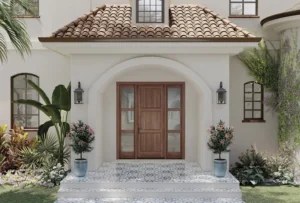
Decorative/Glass-Panel Doors: Homes with ornate details, Mediterranean, Victorian, or eclectic designs. Curved lines, intricate moldings, or colorful accents stand out. Glass-panel or fiberglass doors complement these stylish facades.
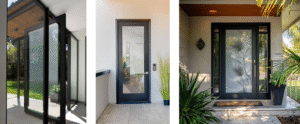
Explore different designs in our front doors and see what fits your home best.
5. Energy Efficiency of Entry Doors
A well-insulated door helps maintain comfortable indoor temperatures and can lower heating and cooling costs. Look for doors with high insulation values and energy-efficient glazing.
Energy-efficient doors are available in wood, fiberglass, steel, and aluminum options, suitable for homes across different climates.
6. Professional Installation Matters
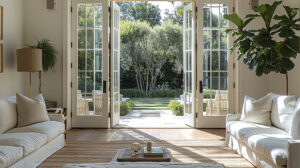
Doors come in standard, oversized, and custom sizes:
- Standard doors: Fit most homes and entryways.
- Oversized doors: Make a bold statement and suit larger openings.
- Custom doors: Allow for unique dimensions or specific design preferences.
Selecting the right size ensures a proper fit and enhances both functionality and aesthetics.
Learn more about our door installation services.
7. Get a Personalized Estimate
Even the best door needs proper installation to perform optimally. Professional installation ensures a perfect fit, proper alignment, and long-term durability.
Learn about installation services for both single and double doors and what to expect during the process.
8. Local Door Services
For homeowners in the Lower Mainland, specific service locations include:
- Burnaby Door Supply & Installation
- Richmond Door Supply & Installation
- Surrey Door Supply & Installation
- New Westminster Door Supply & Installation
No matter your location, a variety of door types, materials, and configurations are accessible to suit your home’s needs.
Conclusion
Choosing the right exterior door involves balancing style, material, energy efficiency, and size. By understanding your options. Single vs double doors, materials, and design styles, you can make an informed choice that enhances your home’s appearance, comfort, and security.
Even without focusing on sales, learning about different door types, materials, and installation considerations can help homeowners make smart, confident decisions for their new home.